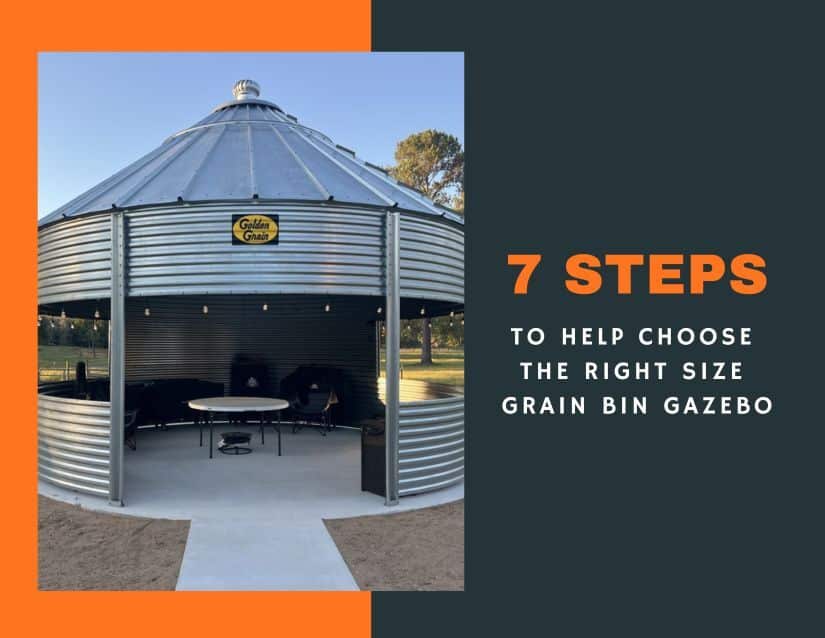
7 Steps to Help Choose the Right Size Grain Bin Gazebo
So you’ve decided on a grain bin gazebo—smart move!
They’re one of the most unique and versatile backyard features you can add. With their rustic charm and industrial strength, they transform an ordinary yard into a warm, inviting gathering space.
But before you start picturing late-night bonfires or pouring drinks under that corrugated steel roof, there’s one key question to answer:
What size grain bin gazebo is right for you?
If it’s too small, it’ll feel cramped. Too large, and it’ll overpower your space (and your budget).
At Creative Backyards, we want you to have a backyard you can enjoy — and get there with the best bang for your buck. Here’s how to find the perfect size for your yard, lifestyle, and plans for the years ahead.
Ready? Let’s get started!
Table of Contents
- Assess Your Outdoor Space
- Define the Purpose and Usage
- Plan for Seating and Capacity
- Budget Considerations
- Plan for Future Flexibility
- Aesthetic and Layout Balance
- Permits and Placement
- Final Thoughts
Not enough time to read? Here’s a summary:
- Assess Your Outdoor Space: Measure the open area, leave walking space, consider the view, and plan for pathways and landscaping to ensure the gazebo complements your yard.
- Define Purpose and Usage: Determine what you’ll use the gazebo for, as different activities require different sizes.
- Plan for Seating and Capacity: We recommend allocating approximately 20 square feet per person for comfortable seating and circulation, and add extra space for features like fire pits, grills, or additional furniture.
- Budget Considerations: Factor in costs beyond the gazebo kit itself, including foundation, permits, installation, and add-ons like flooring, lighting, and railings.
- Plan for Future Flexibility: Choose a slightly larger size than initially needed, plan for utilities, consider year-round use, and allow for open pathways for future landscaping or decks.
Let’s break down how you can choose the right size of grain bin gazebo, step by step.
Assess Your Outdoor Space
Before anything else, grab your tape measure.
A gazebo’s size isn’t just about diameter—it’s about fit. You want it to complement your space, not crowd it.
Here’s what to check:
- Measure the open area. Mark off any slopes, trees, or patios nearby.
- Leave walking space. Keep at least 3–5 feet of clearance around the structure.
- Consider the view. Place it where you can enjoy sunrises, sunsets, or shade.
- Think about the layout. Plan for pathways, lighting, and nearby landscaping.
With those considerations in mind, here’s a quick guide to common gazebo sizes and their uses.
| Gazebo Size | Ideal Use | Occupant Capacity |
| 12’ (113 sq ft) | Private retreat or café nook | 4-6 people |
| 15’ (177 sq ft) | Family dining or small gatherings | 8-10 people |
| 21’ (346 sq ft) | Parties or backyard events | 16-18 people |
| 27’ (575 sq ft) | Small wedding | 28-30 people |
For example, if your yard measures 40×50 feet, a 12-foot grain bin gazebo provides the perfect balance—plenty of room for guests without overwhelming the space.
Pro tip: If you’re unsure, go slightly bigger than you think you need—you’ll almost always grow into it.
Define the Purpose and Usage
Now that you’ve figured out how much space you’ll need, the next thing you’ll need to ask yourself is: What’s the gazebo for?
As shown in the previous chart, different uses require different sizes.
A 12-foot gazebo is ideal for building a cozy reading or coffee nook. With a 12- or 15-foot gazebo, you have the makings for a fantastic outdoor family hangout spot, a family dining space, or a lounge for playing games (that’s assuming you like each other—a slightly larger space might help with sibling rivalry!). From that point, larger spaces like 18- to 21-foot (and larger) gazebos make fine entertaining spaces, with enough room for an outdoor bar or kitchen.
Generally, for a cozy personal retreat, smaller is fine. But for entertaining friends or hosting events, go up in size—you’ll never regret the extra space.
Plan for Seating and Capacity
Forget about square footage charts for a minute, and think about how it feels when people move through the space. You want your guests to linger comfortably and enjoy their time there, instead of feeling like they’re in a crowded subway train. Interestingly, that’s a good analogy, as researchers have discovered that time feels like it slows down in overcrowded spaces.
If you like numbers, crunch this: Each person needs roughly 12 square feet for comfortable seating and circulation, though in our experience with the circular spaces of a grain bin gazebo, we recommend 20 square feet—the reason being that in a circular room, straight furniture takes up more space. Here’s how that breaks down:
- That 12-foot coffee spot reading nook we talked about earlier is about 113 square feet, so you can fit up to 4 people comfortably, and it gets snug at 6.
- A 15-foot gazebo would come to about 177 square feet, ideal for a family of 6 to 8.
- Want to entertain in an outdoor kitchen? An 18-foot gazebo would provide space for your outdoor kitchen and space for up to 10 guests.
Add extra space if you plan to include:
- A fire pit or grill in the center
- Benches, couches, or planters around the perimeter
- Overhead lighting or fans
In the grand scheme of things, it’s better to provide extra space so everyone can enjoy it equally.
Budget Considerations
Here’s the reality—bigger gazebos cost more. Not just in materials, but in setup and preparation. In addition to the varying cost of your gazebo kit depending on its size, factor in these additional costs:
- Foundation: You absolutely need a foundation for your heavy, steel gazebo. Gravel pads are affordable, but we recommend concrete slabs for stability.
- Permits: You’ll likely need a permit for a concrete slab, even for one under 200 square feet, but the specific requirement depends on your city or county’s regulations. Our blog about prefab garages answers similar questions (talk to us about permits!)
- Installation: Whether you’re converting an old grain bin or purchasing a kit, there’ll be extra costs, such as transportation, help with setup, or hiring a contractor to do the installation.
- Add-ons such as flooring, lighting, fans, railings, and other accessories increase the total cost.
If you want something that’s both durable and simple to install, Creative Backyards’ new grain bin gazebo kits are ideal, as Jerald, our owner, demonstrates. Unlike converted bins, our kits are manufactured new—so you get the rustic look without the rust or restoration headaches.
Plan for Future Flexibility
Think beyond this summer.
That cozy family space today might host a graduation party or anniversary dinner next year. To future-proof your investment:
- Size up slightly. It’s easier to add furniture than to wish you had more room.
- Plan for utilities. Leave space for wiring or solar-powered lighting.
- Think about the seasons. A larger gazebo has space for heaters in winter and fans in summer.
- Allow for flexibility. Keep open pathways for future landscaping or decks.
Your gazebo should grow with you—not box you in.
Aesthetic and Layout Balance
Size affects how your gazebo looks in the landscape. Your gazebo should flow with your landscape, not dominate the view.
While a small gazebo makes a cozy accent, a larger one becomes a bold centerpiece!
- Small yards: 12-15 ft feels balanced and open.
- Medium yards: 18-21 ft adds function without clutter.
- Large lots: 21-27+ ft make a stunning visual anchor.
Pair your grain bin gazebo with matching outdoor furniture, pathway lighting, or stone pavers for a finished look that feels intentional and inviting.
Permits and Placement
As we mentioned earlier, check your local zoning regulations before committing to purchasing your gazebo.
If you live in an urban area, you’ll also need to check your local HOA rules.
The permit office and HOA may have some requirements, such as:
- Setback distances from property lines
- Foundation requirements for safety
- Height restrictions for your neighborhood
A quick phone call can save you a lot of time later. And while the HOA isn’t a government entity, you ignore them at your own peril, as you’d be violating the rules you agreed upon when you purchased your home.
While HOAs and townships are generally not evil (though they have occasionally gotten out of hand), they can be challenging with structures like larger gazebos. Do yourself and your neighbors a favor: talk to your local government and HOA before you buy your grain bin gazebo. It may sound like we’re beating a dead horse, but permits are really that important.
Final Thoughts
Choosing the right size grain bin gazebo isn’t just about measurements—it’s about how you’ll use your outdoor space and how you want it to feel.
In short, start by measuring, then think about purpose, comfort, and future growth.
At Creative Backyards, we sell American-made grain bin gazebo kits that are designed to last for decades, combining the rustic beauty of farm-style steel with modern convenience and craftsmanship. Whether you want a peaceful garden nook or a statement piece for big gatherings, we’ll help you find the right fit for your space and budget.
Ready to start planning your dream gazebo? Visit CreativeBackyards.com or stop by our Plattsmouth, NE location.
Your perfect backyard gathering spot starts here!
Other Posts
What Size Garage Do I Need For Two Cars? A practical homeowner’s guide
Maintenace Tips For Your Grain Bin Gazebo