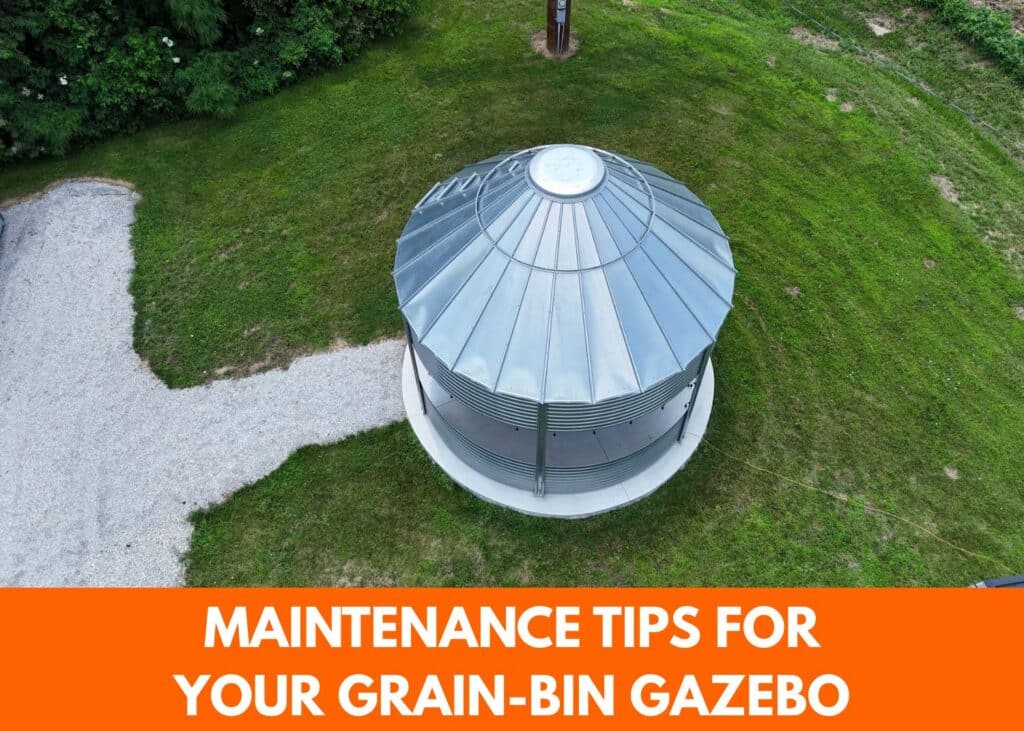
Maintenace Tips For Your Grain Bin Gazebo
A grain-bin gazebo is a unique and beautiful addition to your outdoor space, providing a tranquil retreat for relaxation, entertainment, and family gatherings. However, to ensure its longevity and maintain its appearance, regular maintenance is essential.
At Creative Backyards, we’re not content to merely sell one of our hand-crafted grain-bin gazebos. We want to ensure your investment continues to deliver years of use and enjoyment. One way we can help you is by providing tips for maintaining your gazebo.
In this guide, we’ll cover practical, seasonal, and long-term maintenance tips that will help you protect and extend the lifespan of your grain-bin gazebo. From cleaning and inspections to rust prevention, concrete pad upkeep, and optional upgrades, these maintenance practices will keep your gazebo in top condition year-round.
Table of Contents
- Seasonal Cleaning Tips
- Inspecting Panels, Bolts, and Supports
- Rust Prevention
- Concrete Pad Maintenance
- Winter Care: Snow Load Control & Ice Prevention
- Summer Care: Heat Expansion, UV Exposure, and Coating Checks
- Best Tools and Supplies for DIY Maintenance
- When to Call for Professional Inspection or Service
- Conclusion
No time to read? Here’s a TL;DR:
- Perform regular seasonal cleaning and clear debris to prevent long-term damage.
- Inspect structural components (panels, bolts, supports) frequently and tighten or replace any loose or damaged parts.
- Maintain the concrete pad’s drainage and check for cracks, while taking extra steps for winter (snow/ice removal) and summer (heat/UV protection).
Need more detail on how to take care of your grain bin gazebo? Keep reading below!
Seasonal Cleaning Tips
Cleaning your grain-bin gazebo is crucial for maintaining its appearance and preventing long-term damage. The changing seasons bring different challenges, so adjusting your cleaning routine accordingly is essential.
- Spring & Summer: As the weather warms up, your gazebo will likely accumulate dirt, pollen, tree sap, and dust. Use a soft brush and mild detergent to clean the metal panels and supports. Avoid abrasive cleaning tools that could scratch the surface. Consider using a pressure washer on a low-pressure setting to clean the roof, but keep the nozzle at a distance to avoid damaging the metal. Clean out the gutters regularly to ensure proper water drainage. If you have nearby trees, check for sap or bird droppings, which can cause staining over time.
- Fall: With cooler weather, leaves and debris begin to fall, which can accumulate on the roof and around the base of your gazebo. This can block drainage channels and create damp spots that may lead to rust. Regularly clear leaves, twigs, and debris from the roof and gutters. You may also want to inspect the roof for signs of wear or damage from high winds or storms. It’s also a good time to inspect the concrete pad for any cracks or shifting caused by temperature changes.
- Winter: Snow and ice can quickly accumulate on your gazebo, causing potential damage. Heavy snow can add weight to the roof, while ice buildup can cause cracks in the metal. Gently remove snow using a snow rake or broom, ensuring you don’t damage the roofing material. Be sure to remove ice build-up around the eaves, as it can damage the gutters and downspouts. Winter care requires vigilance to protect against freeze-thaw cycles that can cause long-term damage.
Inspecting Panels, Bolts, and Supports
Performing regular inspections of your gazebo’s structural components is essential for preventing costly repairs.
- Panels: Over time, the metal panels of your gazebo may wear due to weather exposure, including UV rays, rain, and snow. Check for signs of rust, corrosion, or warping, especially around seams and edges where water can accumulate. If any panels begin to loosen or show significant damage, replace them promptly to prevent further deterioration.
- Bolts & Supports: Bolts and fasteners secure the structure; inspect them regularly. Over time, they can loosen due to wind or the natural expansion and contraction of materials. Tighten any loose bolts and check for rust. If you notice any damaged or rusted bolts, replace them immediately with new ones to ensure the structural integrity of your gazebo.
- Roof Supports: Inspect the roof supports for any signs of sagging or weakening. Over time, weather can weaken metal supports, posing safety hazards. If you notice any issues, contact a professional for repair.
Rust Prevention
Rust can cause significant damage to your gazebo’s metal components, leading to costly repairs and potentially compromising the structure’s safety. Here’s how to prevent rust and keep your gazebo protected:
- Regular Touch-ups: Inspect the protective coatings on your gazebo annually. If you notice any chips, scratches, or worn areas, touch them up immediately to prevent moisture from entering the metal. This will help extend the paint’s service life and avoid rust formation.
- Rust Removal: If you spot rust on any part of the gazebo, address it promptly. Use a wire brush or sandpaper to remove the rusted area, then apply a rust-inhibiting primer and paint to restore protection.
Concrete Pad Maintenance
The concrete pad is the foundation of your gazebo, and maintaining it is critical for stability and longevity. Care of the pad is like a concrete patio:
- Drainage: Proper drainage is essential to prevent water from pooling around the base of your gazebo. Over time, standing water can seep into the concrete, causing it to crack or shift. Ensure the ground around the pad slopes away from the gazebo to promote drainage. Check gutters and downspouts to ensure they’re directing water away from the structure.
- Cracks & Sealing: As the seasons change, the concrete pad may experience stress from freeze-thaw cycles, leading to cracks. Inspect the pad regularly for signs of cracking or settling. Use a concrete filler to fill any cracks and prevent further damage. Sealing the concrete every couple of years will help protect it from moisture and prevent the growth of mold or mildew.
- Water Flow: Ensure that water can flow freely around the gazebo’s base by keeping drainage channels clear. If the concrete pad is poorly sloped, consider adding a slight grade to direct water away from the structure.
Winter Care: Snow Load Control & Ice Prevention
During the winter months, your gazebo is exposed to harsher conditions, and it’s essential to take extra steps to protect it.
- Snow Load Control: Heavy snow can quickly accumulate on the roof, adding weight that may exceed the structure’s load capacity. Periodically remove snow from the roof, especially after heavy snowfalls. Use a snow rake or broom with a soft brush to avoid damaging the roofing material. Do not use a metal rake, as it can scratch the surface and damage the protective coating.
- Ice Prevention: Ice can form along the gazebo’s eaves, causing damage to the roof, gutters, and downspouts. Use ice-melting products designed for metal surfaces, and avoid using rock salt, which can corrode the structure. Preventing ice buildup is crucial for maintaining the gazebo’s longevity and avoiding costly repairs.
Summer Care: Heat Expansion, UV Exposure, and Coating Checks
During the warmer months, your gazebo faces different challenges from heat and UV exposure. Here’s what to do:
- Heat Expansion: Extreme temperatures can cause materials to expand and contract, leading to warping or distortion. Check for any signs of expansion, especially in metal panels and supports. Make sure bolts and fasteners are securely tightened to prevent movement.
- UV Exposure: Prolonged exposure to UV rays can cause the metal to fade, lose its protective coating, and become brittle over time. Check the paint or coating on the structure and apply a fresh coat as needed. Ensure the gazebo’s metal parts are adequately protected against UV-induced deterioration.
Best Tools and Supplies for DIY Maintenance
Having the right tools and supplies can make maintaining your gazebo a breeze. Here are some essential items to keep on hand:
- Pressure Washer: A low-pressure pressure washer can be used to clean the roof and walls without damaging the surface.
- Rust-Inhibiting Paint & Primer: For touch-ups and repainting.
- Concrete Filler: To repair cracks in the concrete pad.
- Snow Rake: For safely removing snow from the roof.
- Lubricants: To keep bolts and fasteners functioning smoothly.
- Brushes and Cleaners: For routine cleaning and maintenance.
When to Call for Professional Inspection or Service
While routine DIY maintenance is essential, some tasks are better left to professionals. Here are a few scenarios where you may want to schedule an inspection or service:
- Structural Issues: If you notice any sagging, warping, or significant damage to the panels, roof, or frame, call a professional to assess the situation. If you have a Creative Backyards grain bin gazebo, contact us—our gazebos are designed to withstand the elements, and we want to help you repair it.
- Roof Damage: If the roof has leaks, cracks, or signs of severe wear that cannot be repaired with routine maintenance, a professional roofing contractor should inspect it. As with structural issues, Creative Backyards will work with you to replace any roof panels if you have one our grain bin gazebos.
- Concrete Issues: If the concrete pad exhibits significant cracking or settling, it may require professional repair to ensure structural stability.
Conclusion
Proper maintenance is essential to keep your grain-bin gazebo looking beautiful and functioning well for years to come. By following these seasonal cleaning, inspection, rust prevention, and care tips, you can ensure your gazebo stays in top shape year-round.
Remember, regular DIY maintenance is key, but don’t hesitate to call in a professional when necessary. With proper care, your grain-bin gazebo will remain a stunning, functional addition to your backyard for many years to come.Got more questions about your Creative Backyards grain bin gazebo? Give us a call—we’ll be happy to advise you on taking care of your investment!
Other Posts

6 Man Cave Shed Ideas That Will Inspire Your Next Backyard Upgrade

7 Steps to Help Choose the Right Size Grain Bin Gazebo