Site Prep for Sheds in Nebraska & Iowa
Nothing takes the shine off a new shed, cabin, or portable garage faster than a rough delivery day. Maybe the truck can’t fit through the gate. Maybe the ground is soft and uneven. Maybe nobody thought to mark the sprinkler line until it’s too late. Preparing your site for a shed or backyard building in Nebraska and Iowa before delivery day is the easiest way to avoid these problems and get your new structure set exactly where you want it.
At Creative Backyards, we’ve delivered more than 600 structures across Nebraska and Iowa, and we’ve seen firsthand how much a little planning helps. Whether you’re adding a shed, a prefab cabin, or a portable garage, the prep work you do before we arrive determines how smooth (and how fast) your delivery goes.
Here’s what to check before your building shows up, starting with picking the right spot.
Table of Contents
- Step One: Choose the Best Location
- Step Two: Prepare the Site Itself
- Step Three: Plan for Delivery Day Access
- Step Four: Check Permits, HOA Rules, and Utility Lines
- Step Five: Run Through Your Pre-Delivery Checklist
- Picture Delivery Day Done Right
TL;DR: How to prepare your site for a shed in Nebraska
No time to read? Here’s the lowdown:
- Choose a location with good drainage, sunlight, and proper accessibility for the delivery truck.
- Prepare your site with a level, full-footprint gravel pad or concrete slab to ensure long-term stability.
- Ensure a clear delivery path by removing overhead obstacles like branches and ground obstructions like fences or gates.
- Verify all legal requirements, including local permits, HOA rules, and underground utility lines, before starting any work.
- Use the pre-delivery checklist to confirm your site, access path, and paperwork are all ready before the building arrives.
Step One: Choose the Best Location
A good location does more than look nice. It sets your building up to last. Before you settle on a spot, walk your yard and think through these four things:
- Accessibility. Delivery works the same way no matter what you’re getting: the building comes in on a truck, gets unloaded at the road, and is walked across your property with a mule. What matters most is a wide, unrestricted pathway, at least 2 feet wider than the building you’re setting, all the way from the road to your site.
- Drainage. Water should flow away from the building, not toward it. Avoid low spots where rain tends to pool.
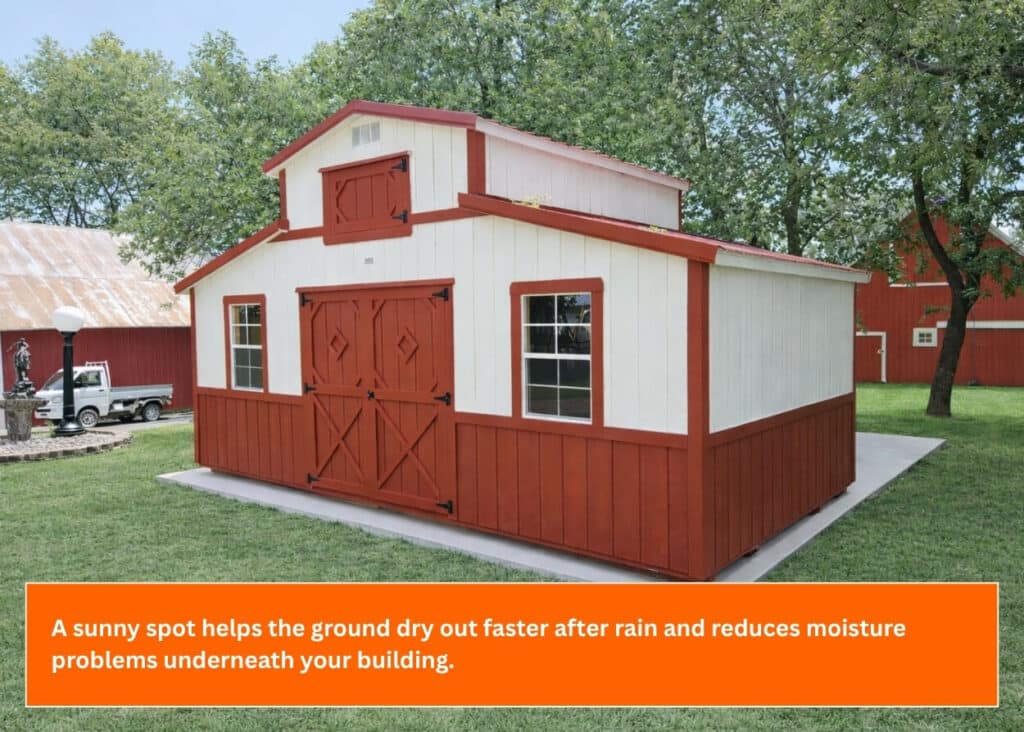
- Sunlight. A sunny spot helps the ground dry out faster after rain and reduces moisture problems underneath your building.
- Setback requirements. Cities and counties in Nebraska and Iowa each set their own rules for how close a structure can sit to your property line, so check with your local zoning office before you mark your spot.
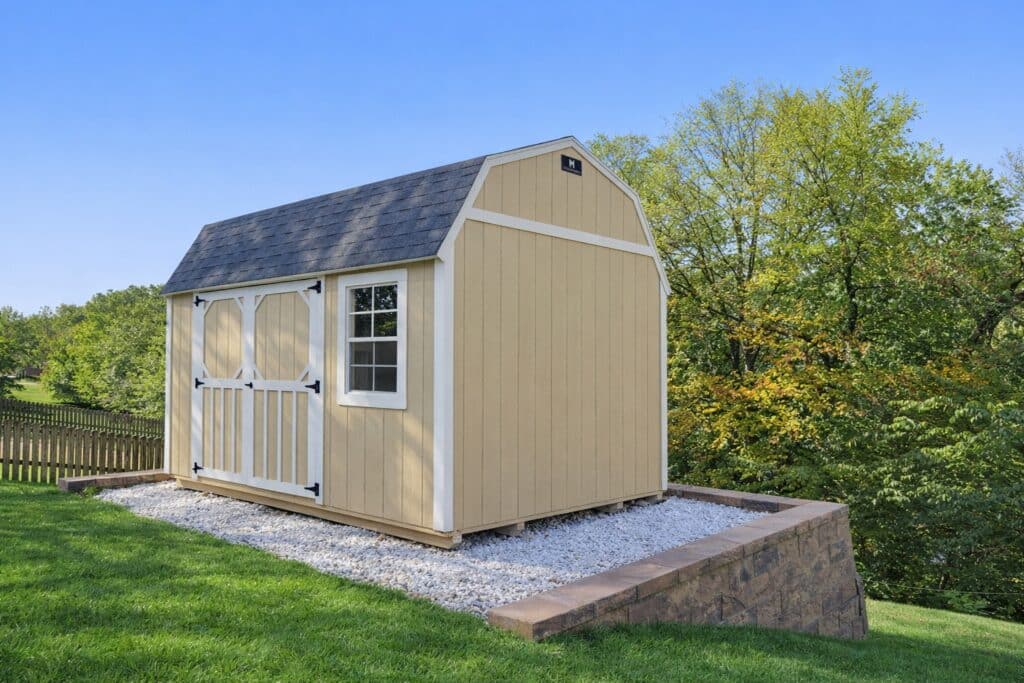
If your yard slopes or the ground around your chosen site isn’t level, you may need a retaining wall to hold your pad in place. We’re happy to walk your property with you and point out anything that might affect placement. We also offer free site evaluations in our area, so you don’t have to guess.
Step Two: Prepare the Site Itself
Once you’ve picked a spot, it’s time to prepare the ground. This step has the biggest impact on how well your building holds up over the years.
Every pad, no matter which type you choose, needs to be level and built slightly higher than the surrounding ground so water drains away instead of pooling underneath.
You have three options:
- Direct ground placement. Our floor systems use green pressure-treated lumber rated for ground contact, so sheds 12×16 and smaller can technically sit right on the ground. We still recommend a gravel pad or concrete slab for better long-term results, and sheds 12×20 and larger, along with cabins and portable garages, should always have one.
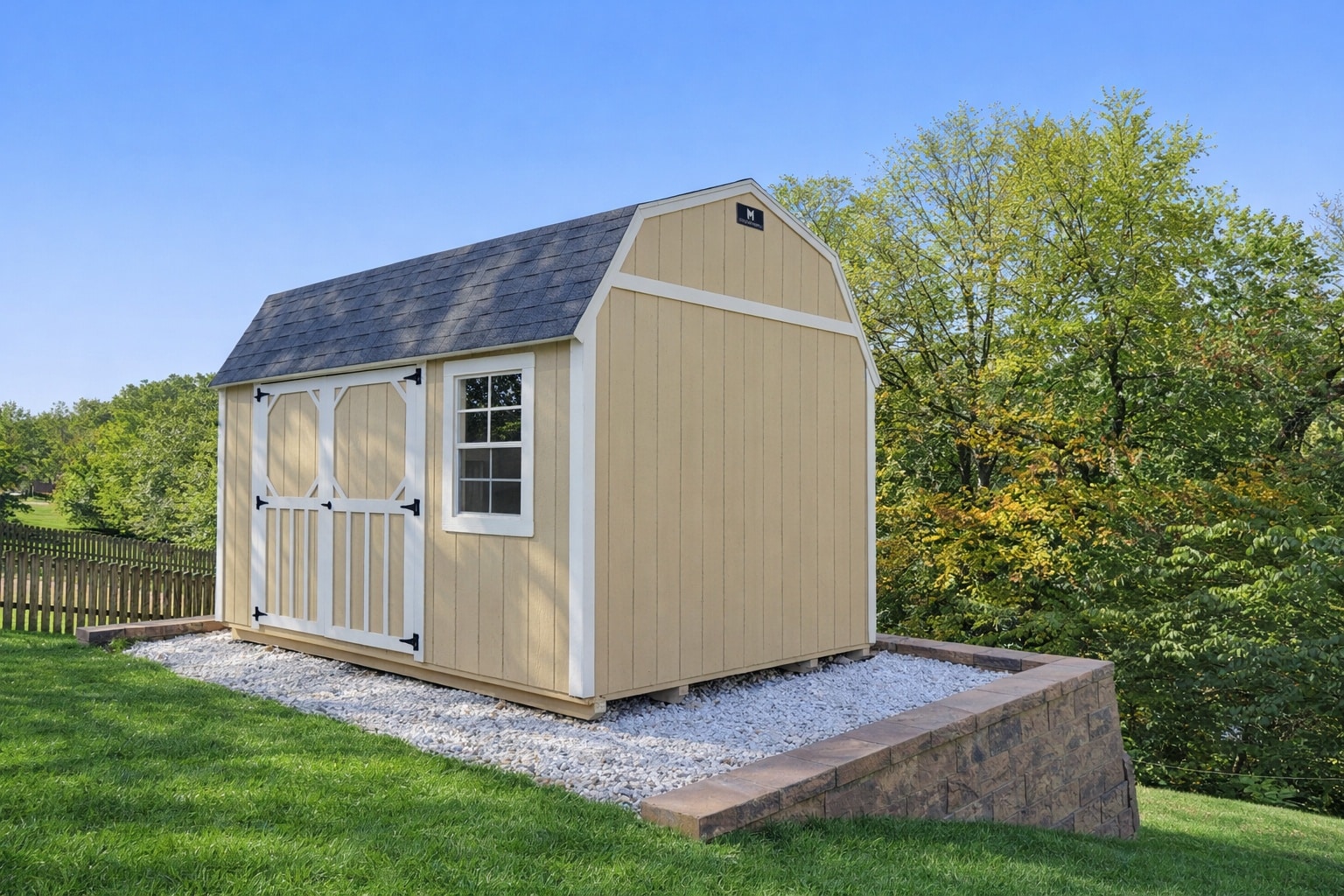
- Gravel pad. This is our most popular option. Use 3/4-inch gravel (skip the pea gravel), 4 to 6 inches deep, extending about a foot past the building on every side. Gravel drains well, supports the structure, and helps keep moisture away from the floor.
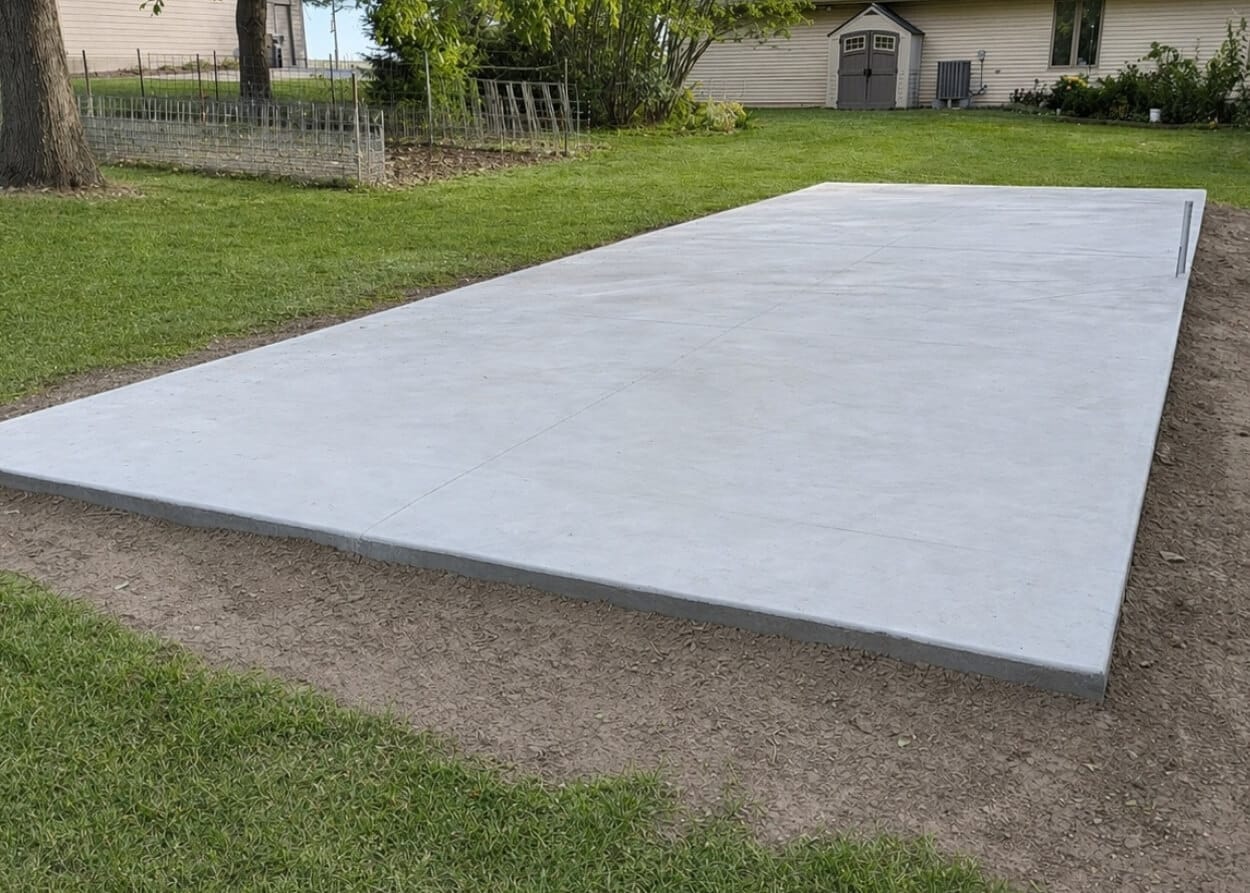
- Concrete slab. A floating slab built to the exact size of your building works great, especially for portable garages with frequent vehicle use. Plan for 6 inches of thickness with an 8- to 10-inch thickened edge.
We also offer sheds, cabins, and garages without a floor system, built to anchor directly to a concrete slab instead. If you go this route, the concrete slab isn’t optional, it’s required, since there’s no floor system underneath to spread the load across gravel.
Before your pad goes in, clear the area of grass, weeds, roots, rocks, and any other debris. A full, level pad under the entire footprint, not just the corners, gives your building the best possible support.
That full-footprint support matters because of how the floor itself is built. Shed and cabin models have floor joists spaced every 16 inches on top of the skids, topped with a 3/4-inch floor, and portable garages have floor joists spaced every 12 inches for extra strength under vehicle weight. Both are engineered for consistent support across the whole floor, not just under the skids, which is exactly what a properly prepared pad gives them.
Step Three: Plan for Delivery Day Access
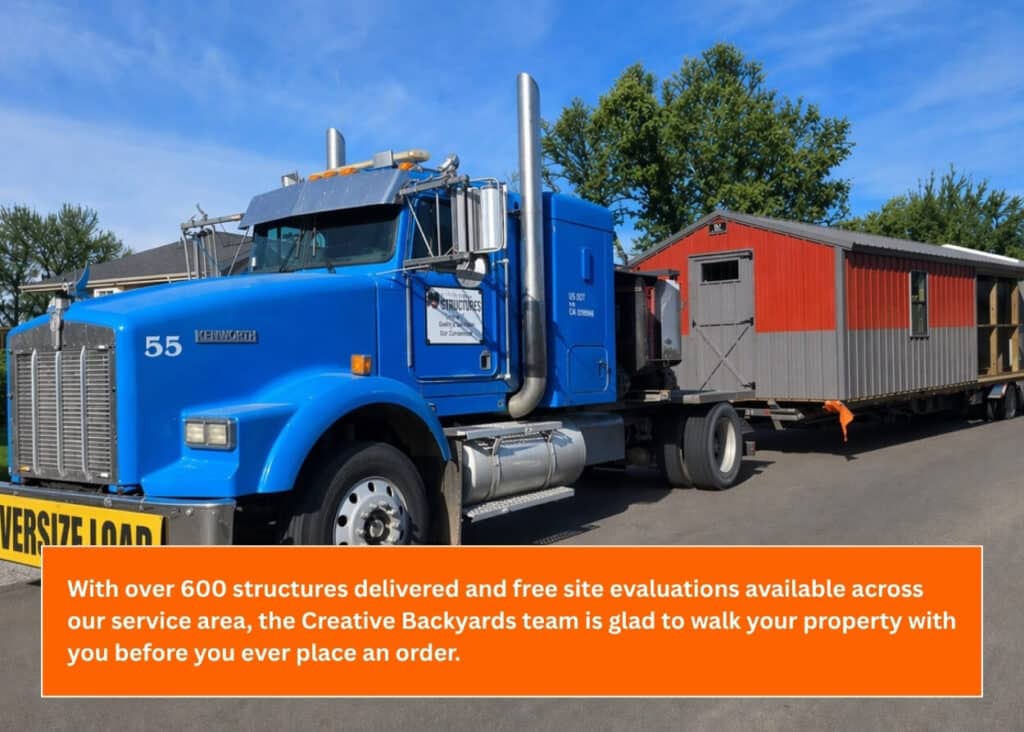
Even a perfectly prepped pad won’t help if our truck can’t reach it. Buildings arrive fully assembled on a semi and trailer, are unloaded at the street, and get walked back to your site using a mule.
To make that happen safely, plan for:
- Width. A clear path about 2 to 4 feet wider than your building.
- Overhead clearance. Roughly 14 to 15 feet of height, so watch for tree limbs and power lines.
- Obstacles. Clear fences, gates, trees, shrubs, and yard decorations from the path. We can’t lift buildings over fences, so any gate or fence section in the way needs to come down ahead of time.
- Slopes. Steep grades between the street and your site can make delivery difficult or impossible, so flag any slope when you schedule.
If you’re not sure whether your lot will work, ask us for a free site check. It’s a lot easier to solve access problems before delivery day than during it.
Step Four: Check Permits, HOA Rules, and Utility Lines
A few phone calls before delivery day can save you a major headache later. Here’s what to check:
- Permits and local codes. Requirements vary by city and county across Nebraska, and some areas require additional site prep beyond what’s covered here. Check with your local building or zoning office before you finalize your plans.
- HOA rules. If you live in a neighborhood with a homeowners association, review your covenants and get architectural approval before you build. Associations can require removal of a structure that wasn’t approved first, even if it otherwise meets code.
- Utility lines in Nebraska. Call 811 or submit a request through Nebraska811 at least two business days before you dig, mark, or grade anything. It’s a free service, and it’s the only way to know what’s buried where your pad or path will go. You can find homeowner-specific instructions on Nebraska811’s homeowner page, and the Nebraska State Fire Marshal outlines Nebraska’s One-Call law.
- Utility lines in Iowa. Call 811, call 1-800-292-8989, or submit a request through Iowa One Call at least 48 hours before you dig, not counting the day of your call, weekends, or holidays. The Iowa Utilities Commission outlines the state’s One Call law, and once your ticket is issued, it’s good for 25 calendar days.
- Sprinkler heads. These don’t show up on a locate request, so you’ll need to mark them clearly. We can’t cover damage to sprinkler heads in the building’s path.
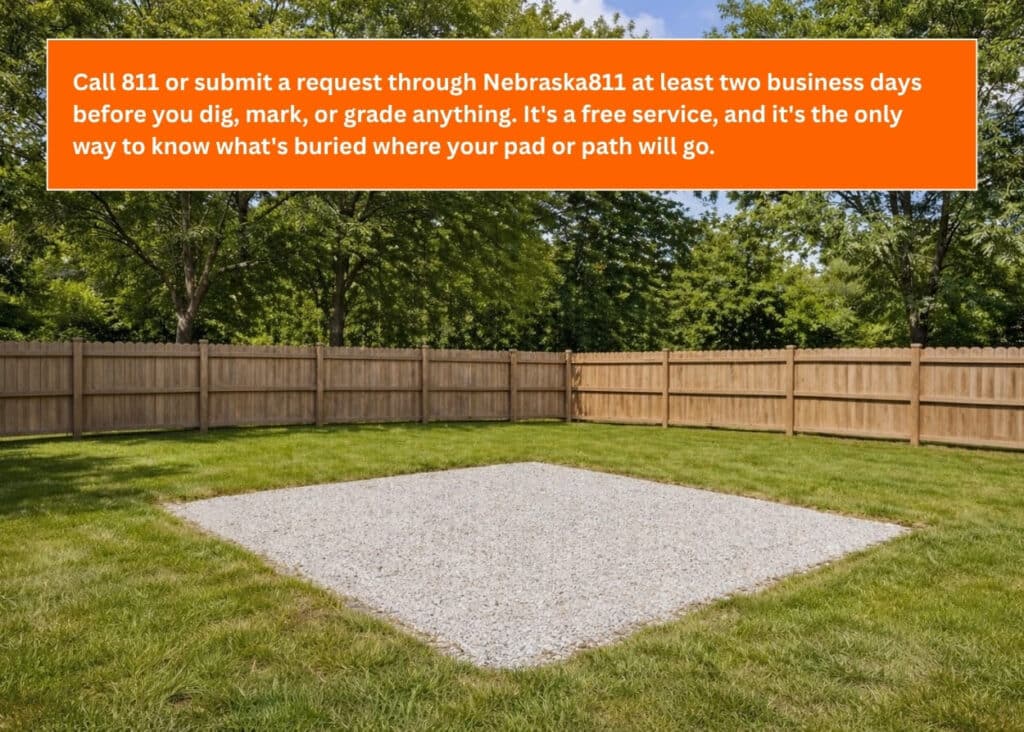
Both locate services are free, and both are the only way to know what’s buried under your pad or delivery path. For more on grading your site for proper drainage, This Old House has a solid step-by-step guide, and Neighbor’s guide to HOA backyard rules is worth a look if you’re navigating an association’s approval process. A general overview of Nebraska shed permit basics can also help you know what questions to ask your local office; and if you’re in Iowa, your city or county building department is the fastest way to confirm what applies to your address, since permit rules vary by state.
Step Five: Run Through Your Pre-Delivery Checklist
Before delivery day, confirm you can check off every item on this list:
- Site is selected, with good drainage, sunlight, and access
- Pad is built, level, and higher than the surrounding ground
- Delivery path is clear and wide enough for our truck and mule
- Low limbs and other overhead obstacles are removed
- Any gates or fences in the path are taken down
- Sprinkler heads are clearly marked
- Permits, HOA approval, and local code requirements are handled
- Nebraska811 locate request is complete
Picture Delivery Day Done Right
Imagine the truck pulling up, the mule guiding your new building straight to a pad that’s level, clear, and ready. No last-minute scrambling, no surprises, just a building set exactly where you pictured it, ready to use the same day.
That’s what proper site prep gets you. And you don’t have to figure it out alone. With over 600 structures delivered and free site evaluations available across our service area, the Creative Backyards team is glad to walk your property with you before you ever place an order.
Stop by our lots at 9510 Renee Ave in Plattsmouth, NE 68048 or 215 S 25th St in Denison, IA 51442, or reach out to schedule your free site check. We’ll help you get your ground ready, so delivery day for your garage or cabin is quick, safe, and exactly as easy as it should be.
Other Posts
Site Prep for Portable Garages & Cabins in Nebraska & Iowa
Site Prep for Sheds in Nebraska & Iowa