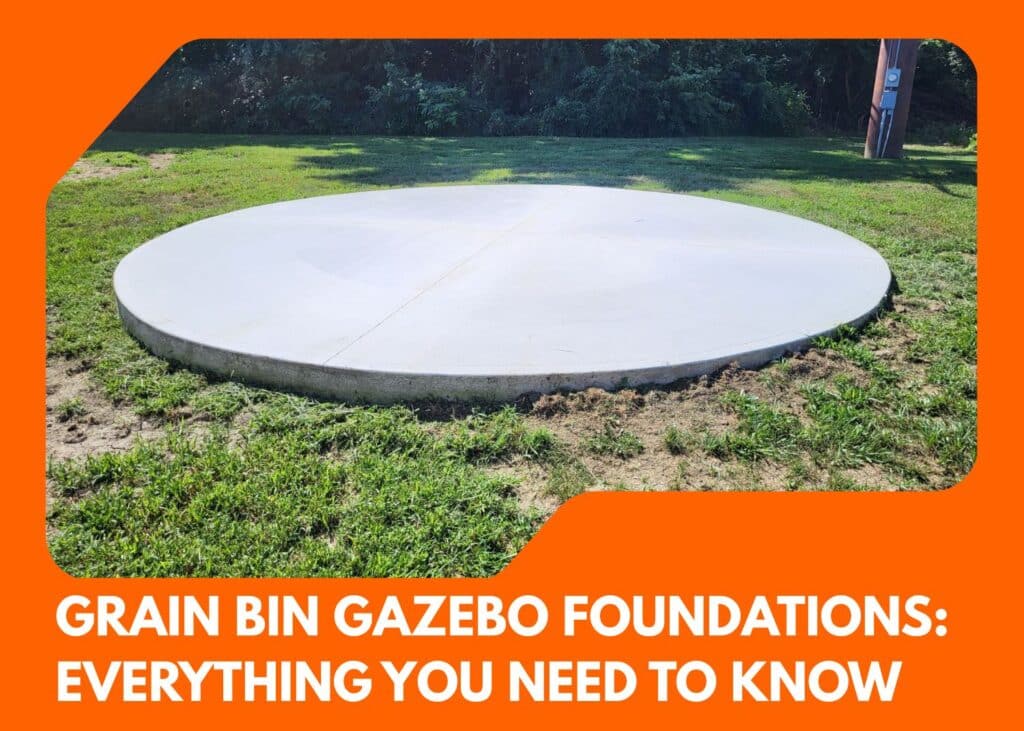
Grain Bin Gazebo Foundations: Everything You Need to Know
When it comes to building a grain-bin gazebo, the foundation is the backbone of the structure. It ensures that your gazebo remains level, stable, and secure for years to come. Proper foundation preparation involves several crucial steps, including the right materials, measurements, and installation methods.
At Creative Backyards, we’re not content to merely sell you one of our hand-crafted grain-bin gazebos. We want to ensure your investment continues to deliver years of use and enjoyment. One way we can help you is by ensuring that your new grain bin gazebo is sitting on a solid, stable foundation.
In this post, we’ll walk you through the key factors of foundation preparation for your grain-bin gazebo. We’ll cover everything from site selection to reinforcement, providing a solid understanding of why a proper foundation is essential to your gazebo’s longevity and safety.
Ready? Let’s get started!
Table of Contents
- Why Grain-Bin Gazebos Require a Proper Concrete Foundation
- Recommended Concrete Pad Thickness, Diameter, and Reinforcement
- Grading, Leveling, and Drainage Setup Before Pouring the Pad
- How to Choose the Best Location for Your Foundation
- Tips for Avoiding Foundation Mistakes
- Concrete Curing Times and What to Expect Before Installation
- Cost Factors and What Impacts Pricing
- When to Hire a Professional vs. DIY the Foundation Prep
- A Solid Foundation for a Future of Outdoor Enjoyment
Short on time? Here’s a summary:
- A solid foundation is crucial: it prevents structural damage, movement, and water intrusion for heavy, large-grain-bin gazebos.
- Dimensions & Reinforcement: Use a standard 4-inch (or 6-inch for large/freeze-thaw areas) thick concrete pad, extending 6-12 inches beyond the base. Reinforce with steel rebar or wire mesh.
- Site Prep is Key: Ensure proper grading (1-2% slope away from the pad), leveling, and drainage (gravel trenches or French drain) before pouring the concrete.
- Curing & Professional Help: Concrete requires approximately 7 days to be safe for installation and 28 days to cure fully. Consider hiring a professional for complex sites requiring significant grading or drainage work.
Why Grain-Bin Gazebos Require a Proper Concrete Foundation
A solid concrete foundation is essential for any outdoor structure, especially grain-bin gazebos. These unique structures—often made from repurposed grain bins—are heavy, large, and exposed to various weather conditions. Without a strong foundation, your gazebo could shift, lean, or even collapse over time. While it won’t be as dramatic as a full-scale grain bin collapse, a collapsing structure, no matter the size, is a hazard. A well-built foundation prevents the following common issues:
- Structural Damage: Without proper support, the gazebo’s weight, combined with external factors (wind, rain, snow, etc.), can cause cracks or sagging.
- Movement: A solid base ensures that your gazebo won’t shift or become unstable due to ground movement or erosion.
- Water Damage: A good foundation, combined with adequate drainage, prevents water from pooling around the structure’s base, reducing the risk of rust and rot.
When done right, the foundation anchors the structure, protecting your investment and ensuring your gazebo lasts for years to come.
Recommended Concrete Pad Thickness, Diameter, and Reinforcement
The dimensions of the concrete pad for your grain-bin gazebo depend largely on the structure’s size and weight. Here are the key factors to consider:
- Thickness: The standard thickness for a concrete pad is 4-6 inches. However, the exterior 24” around the perimeter of the pad needs to be thickened to 12-16” to support the weight and withstand any freeze/thaw cycles.
- Diameter: The pad should extend 6-12 inches beyond the gazebo’s base to prevent water from seeping under the structure and causing damage.
- Reinforcement: Reinforcing concrete with steel rebar or wire mesh is crucial to increase strength. The rebar grid should be placed within the pad and arranged in a crisscross pattern to ensure uniform load distribution and reduce the risk of cracking.
Reinforcement is particularly important for gazebos in areas with extreme weather conditions or where soil movement is common.
Grading, Leveling, and Drainage Setup Before Pouring the Pad
Before you pour the concrete, ensure the site is adequately prepared. Improper grading or drainage can lead to long-term issues, including water pooling and uneven settlement. Here’s how to properly prepare the site:
- Grading: The ground should have a slight slope—preferably 1-2%—away from the gazebo’s future location. This slope allows water to drain away from the pad, preventing accumulation around the structure and erosion.
- Leveling: After grading, ensure the ground is level where the pad will sit. Even a minor unevenness can cause the structure to lean. Use a spirit level or laser level to check that the surface is perfectly flat and consistent.
You can see an explanation of grading and leveling in this very informative video.
- Drainage: Good drainage is essential for a long-lasting foundation. Ensure that there’s a way for water to flow away from the gazebo. This can be achieved by digging small trenches filled with gravel around the perimeter of the pad or by installing a French drain. Drainage is critical in regions prone to heavy rainfall or snow.
If drainage is ignored, water could pool around the base of the gazebo, weakening the foundation and promoting rust on metal structures.
How to Choose the Best Location for Your Foundation
Choosing the right location for your grain-bin gazebo is just as important as the foundation itself. The wrong spot can lead to issues over time, including improper drainage or shifting. When selecting a site for your foundation, consider these factors:
- Avoid Low-Lying Areas: Low-lying or depressional areas can cause water to pool around the foundation, leading to potential water damage and erosion. Look for a slightly elevated area to ensure proper water runoff.
- Stable Ground: Ensure the ground is solid and sufficiently stable to support the structure’s weight. If the area has loose, sandy, or highly compacted soil, it may need additional stabilization.
- Accessibility: Choose a location that provides easy access for construction equipment and future maintenance. Keep in mind that certain areas may be difficult for concrete trucks or equipment to access during installation.
Tips for Avoiding Foundation Mistakes
A solid foundation is the key to a successful gazebo, but common mistakes can undermine your efforts. Here’s how to avoid the most frequent foundation issues:
- Sloped Pads: Avoid creating a foundation that slopes in the wrong direction. While a slight drainage slope is necessary, a steep slope can cause the entire structure to tilt. Ensure the pad is level, and verify it at multiple points during installation.
- Insufficient Thickness: Don’t skimp on concrete thickness. A foundation that’s too thin is more likely to crack and fail. Stick to a minimum of 4-6 inches on the pad with the exterior 24” around the perimeter thickened to 12-16”.
- Poor Drainage: Failing to provide adequate drainage is one of the most common foundation errors. Without proper drainage, water will accumulate around the pad, potentially damaging the foundation and structure. Install drainage systems early and verify they function correctly before pouring concrete.
Concrete Curing Times and What to Expect Before Installation
Concrete requires sufficient curing time before the gazebo can be installed. Here’s what you should know about the curing process:
- Curing Time: Concrete typically takes about 28 days to cure and reach its maximum strength fully. However, for installation purposes, the concrete will be safe to work on after about 7 days. During this time, the concrete should be kept moist, especially in hot climates, to avoid cracking.
- Initial Set: After pouring the concrete, it will begin to set within the first few hours. However, the concrete will still be relatively soft at this point. Do not place any weight on or install the gazebo until the concrete has hardened enough to support it.
The challenge with concrete curing vs strength is that the right mix is an art. Consider hiring a concrete professional with the skills and knowledge to mix a concrete base that supports your structure and withstands your environment.
Cost Factors and What Impacts Pricing
The cost of pouring a foundation for your grain-bin gazebo can vary based on several factors:
- Size: Larger gazebos will naturally require a larger, more reinforced foundation, which increases material and labor costs.
- Location: Material and labor costs can vary by region. Additionally, more remote locations may incur higher transportation costs for materials and equipment.
- Site Preparation: If your site needs significant grading or drainage work, expect to pay more—the more preparation work required, the higher the project cost.
- Professional Help vs. DIY: While hiring a professional may incur higher upfront costs, it can save you time, ensure proper installation, and prevent costly mistakes. DIY projects can reduce labor costs but require more time, effort, and skill.
When to Hire a Professional vs. DIY the Foundation Prep
While some homeowners may feel confident enough to pour the foundation themselves, there are situations when hiring a professional is a wise choice:
- DIY: If the ground is relatively level and the site doesn’t require extensive grading or drainage work, and if you have experience with concrete, you may be able to handle the project yourself. Just make sure to follow the recommended procedure and take your time.
- Professional Help: If the site requires significant preparation (grading, drainage, etc.) or if you’re unsure about your concrete skills, it’s best to hire a professional. A contractor will ensure the foundation is reinforced correctly, leveled, and cured, providing peace of mind that your gazebo will remain secure.
A Solid Foundation for a Future of Outdoor Enjoyment
Building a solid foundation for your grain-bin gazebo is essential and should never be overlooked. By taking the time to prepare the site correctly, selecting the right materials, and following the proper procedures for grading, leveling, and drainage, you can ensure your gazebo stands the test of time.
Whether you choose to take on the project yourself or hire a professional, a well-constructed foundation is key to maintaining the safety and longevity of your grain-bin gazebo. While Creative Backyards does not build foundation pads, we can help you locate one in our area or answer any questions you may have about your pad. Contact us to start planning your foundation and grain bin gazebo today for years of enjoyment!
Other Posts
How to Transform a Shed Into a Comfortable, Productive Home Office
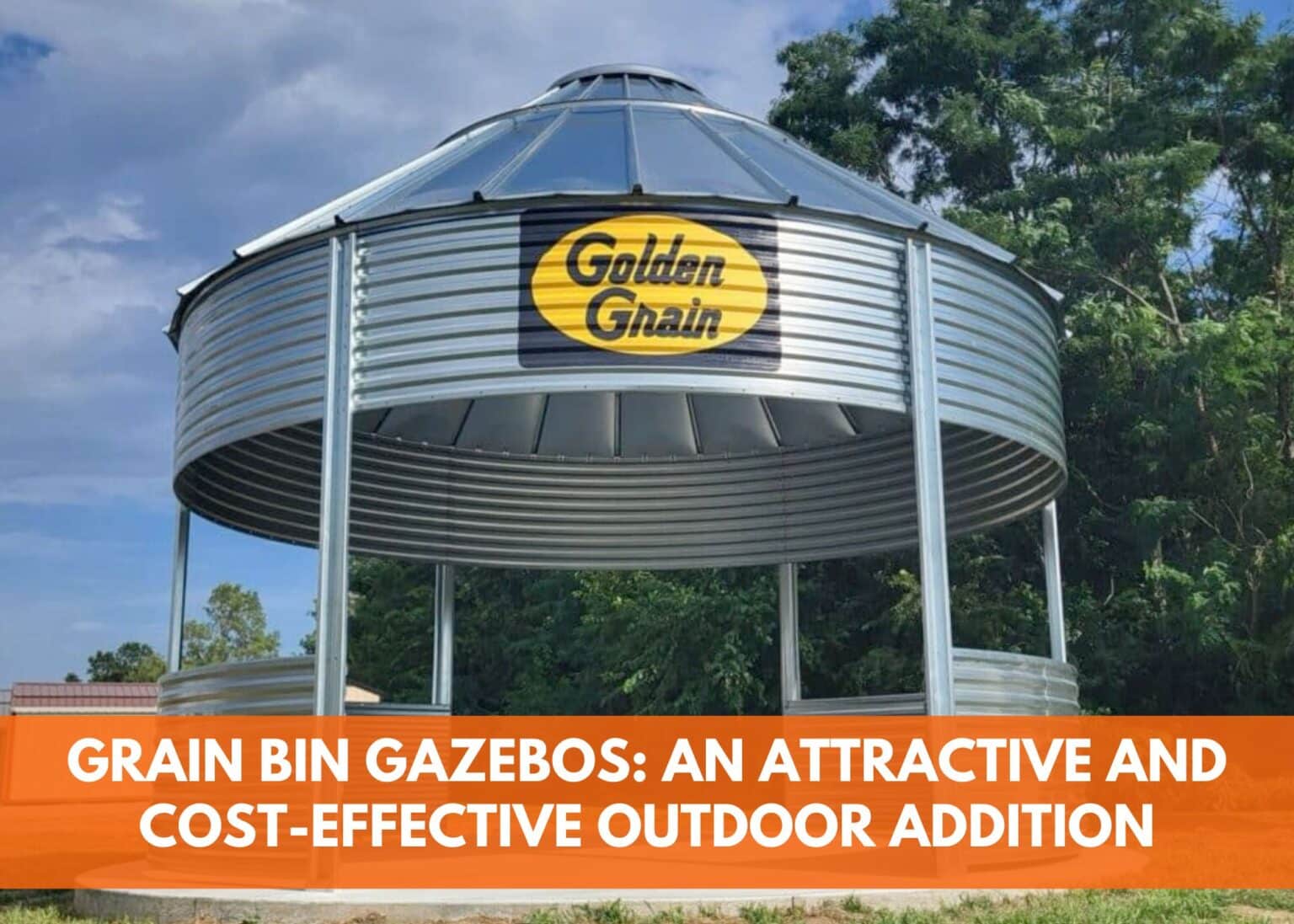
Grain Bin Gazebos: An Attractive And Cost-effective Outdoor Addition