Grain Bin Gazebos vs. Traditional Gazebos: Which Is Best for Your Backyard?
Adding a gazebo is one of the best ways to create a relaxing outdoor retreat. It’s a fun little island getaway in your backyard, but which type is right for you? There are many styles to choose from, with traditional designs such as gable and hip roofs being two popular options.
At Creative Backyards, we know the grain bin gazebo is a less conventional choice, but it is a favorite of ours for many reasons.
Today, we’re comparing grain bin gazebos to traditional gazebos so you can choose the perfect structure for your space, lifestyle, and budget.
Ready to start? Let’s go!
Table of Contents
- Design & Aesthetic Appeal
- Durability & Weather Resistance
- Cost & Installation
- Customization & Features
- Maintenance & Longevity
- Sustainability & Environmental Impact
- Buying a Kit vs Converting
- Which Gazebo is Right For You
No time to read the whole blog? Here’s a TL;DR:
- Grain Bin vs. Traditional Gazebos: Grain bin gazebos are rustic, made of steel, and low-maintenance, while traditional gazebos are classic, typically made of wood/vinyl, and require more upkeep.
- Design & Durability: Grain bin gazebos offer an industrial farmhouse aesthetic and superior durability due to galvanized steel, lasting 40-50+ years. Traditional gazebos provide classic charm and last 20-30 years with proper care.
- Cost & Installation: Grain bin gazebos typically cost more upfront ($5,000-$15,000) and require a heavier base, while traditional kits start around $2,000-$4,000 and are easier to install.
- Sustainability & Options: Grain bin gazebos are often eco-friendly through repurposing. You can buy new grain bin gazebo kits or convert old farm bins, each with pros and cons regarding cost, effort, and authenticity.
What to explore the idea more? Keep reading below!
Design & Aesthetic Appeal: Rustic Steel vs. Classic Charm
One look at a grain bin gazebo, and you know it’s not your average backyard structure.
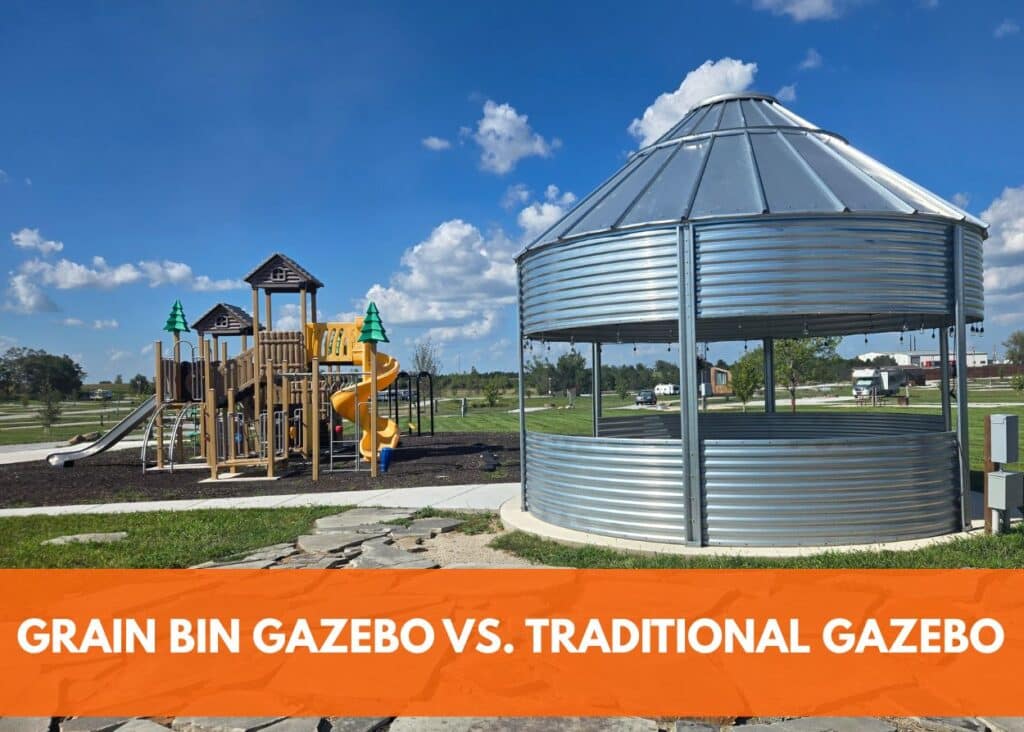
Originally made from repurposed galvanized steel grain bins, these gazebos bring a farm-country style into residential or commercial settings. The corrugated steel and conical roofs create a folksy blend of vintage agricultural character and modern minimalism. While you can repurpose an old grain bin, there are some risks involved in doing so. Therefore, many modern grain bin silos are actually manufactured as kits, such as the ones we offer (we’ll compare kits vs conversions further down this blog).
Homeowners love the grain bin gazebo’s aesthetic:
- It’s got that rugged, industrial farmhouse aesthetic.
- They fit perfectly on rural properties, lake houses, breweries, or event spaces.
- Each one is unique—no two grain bins are the same.
- They work well with fire pits, string lights, or outdoor kitchens inside.
On the other hand, traditional gazebos carry a classic, timeless beauty. Usually built from wood or vinyl, they blend effortlessly with most backyards. Whether your home has a colonial, craftsman, or modern style, a well-designed gazebo always looks right at home.
Why homeowners love traditional gazebos:
- Clean lines and symmetrical shapes.
- Decorative railings, cupolas, and trims add elegance.
- It can be painted or stained to match the home.
- Great for formal gardens, patios, or suburban backyards.
If your taste leans toward rustic and bold, consider a grain bin gazebo. But if you love the feel of a storybook garden, a traditional gazebo is your match.
Durability & Weather Resistance: Steel Strength vs. Natural Warmth
Your gazebo’s durability depends on what it’s made of—and here, steel vs. wood or vinyl makes a big difference.
Grain Bin Gazebos
- They’re made from galvanized steel, since they were initially designed to protect grain from decades of exposure.
- Steel naturally resists rot, mold, pests, and warping.
- Steel’s inherent strength also enables it to withstand strong winds, snow loads, and heavy rain without damage.
- With a quality foundation, these gazebos can last 40–50 years or more.
Traditional Gazebos
- Wood gazebos, made from materials like cedar or redwood, are beautiful and sturdy, but they require sealing or staining every few years to prevent decay.
- Not keen on spending time sealing or staining your gazebos periodically? Modern vinyl gazebos resist rot and pests, but over time, UV rays can cause fading or brittleness.
- With proper care, you can expect 20–30 years of life from a well-built traditional gazebo.
If you live in an area with harsh winters, heavy rain, or strong winds (such as good ol’ Nebraska), the steel construction of a grain bin gazebo will likely last longer and require less upkeep over time.
Cost & Installation: Upfront Price vs. Long-Term Value
Because you’re a wise consumer, you’re likely wondering what the costs are. Let’s discuss numbers, as your budget plays a significant role in your decision.
Traditional Gazebos:
- Prefab wood or vinyl kits start around $2,000–$4,000 for smaller sizes.
- Custom-built or large models with screens, wiring, or decorative trim can cost $10,000 or more.
- Most can be installed in a day or two by a professional crew.
Grain Bin Gazebos:
- Typically cost $5,000–$15,000 depending on diameter, roof height, and customization.
- Reusing an existing grain bin can cut material costs, but transportation and installation can add up.
- Because the structure is heavier, you’ll need a concrete base and anchoring system.
Sure, a grain bin gazebo may cost more than a traditional wood or vinyl gazebo. Still, while the initial price of a grain bin gazebo may be higher, the longevity, durability, and magical charm often make up for it. You’re investing in a unique structure that could outlast several generations of wooden gazebos.
Here are some extra tips to consider as you’re shopping:
- Grain bin gazebos may need machinery to lift roof panels during setup.
- Traditional gazebos often come in prefabricated kits that require only basic carpentry tools and minimal assembly.
Customization & Features: Functional Flair
No matter which style you choose, gazebos are about creating a space you love to spend time in. There are many ways you can decorate your gazebo to make it your own:
Grain Bin Gazebo Add-Ons:
- Custom lighting (pendant or string lights).
- Fans or heaters for all-season comfort.
- Cut-out windows or doors for extra ventilation.
- Decorative laser-cut steel panels or signage.
- Great for events, weddings, breweries, and outdoor dining.
….and many more! The internet is chock full of decorating ideas.
Traditional Gazebo Add-Ons:
- Screens or glass panels for bug-free comfort.
- Built-in benches or wraparound seating.
- Painted finishes, lattice, or railing designs.
- Electrical outlets for fans or hanging lights.
- Shingled, metal, or cedar shake roofs.
Once again, the internet has great ideas to inspire you. Check out these examples on Pinterest.
Creative Uses for Both Types:
- Outdoor kitchen or bar area.
- Hot tub or spa enclosure.
- Farmstand or produce market shelter.
- Cozy reading or coffee nook.
- Backyard dining pavilion.
The right gazebo is more than decoration — it’s an extension of your outdoor lifestyle!
Maintenance & Longevity: What It Takes to Keep Them Beautiful
Maintenance is where the steel vs. wood difference really shows.
Grain Bin Gazebos:
- Requires little more than an annual cleaning with mild detergent.
- A quick inspection for rust or scratches once a year is enough.
- No sealing, staining, or pest control is required, and the surface will even develop a unique and attractive patina over time.
Traditional Gazebos:
- Wood gazebos need resealing or staining every 2–3 years.
- Inspect for loose boards, chipped paint, or mildew growth regularly.
- Vinyl gazebos typically require power washing a few times a year.
- Hardware and roofing should be checked annually.
If low maintenance is a priority, the grain bin gazebo wins hands-down. However, if you love the character of real wood and don’t mind occasional upkeep, a traditional model still retains its timeless appeal.
Sustainability & Environmental Considerations
If you’re eco-conscious, you’ll appreciate that grain bin gazebos often reuse old materials. From fun gazebos to comfortable living spaces, repurposing retired steel grain bins not only gives them new life but keeps large metal structures out of scrap piles and landfills.
Traditional gazebos can also be eco-friendly if built from recycled materials, though they typically do not reuse existing structures.
If sustainability and longevity are your priorities, the grain bin design offers both—a durable structure with a smaller environmental footprint.
Buying a Kit vs Converting
Let’s say you’re set on a grain bin gazebo. You’ve got two paths:
- Buy a new, purpose-built kit from Creative Backyards.
- Or, you can convert an old farm bin yourself.
Both can look amazing—but the difference in effort, cost, and results are big. Here’s a quick breakdown.
Grain Bin Gazebo Kits
Pros:
- Built for gazebo use. Every part is pre-engineered for open-air enjoyment, not grain storage.
- Brand-new materials. No rust, dents, or lingering odors—just clean galvanized steel.
- Fast assembly. Pre-drilled, labeled panels make installation simple for DIYers or pros.
- Size options. No need to worry about finding the right size. You can choose your desired size from a catalog.
- Support. Enjoy factory-new parts with known load ratings and help from the Creative Backyards team!
- Perfect for homes or venues. Easier to meet codes for parks, wineries, and wedding spaces.
Cons:
- Higher upfront price than salvaged bins. You are buying new, after all.
- Lacks the “weathered farm” patina some people love. You could artificially weather it, or let nature run its course. Or maybe you just like it looking brand new.
Traditional Grain Bin Conversions
Pros
- Authentic character. Each dent and rivet tells a story.
- Lower material cost. If you already own a bin, that’s significant savings.
- Eco-friendly reuse. Keeps old steel out of the scrap yard.
- DIY freedom. Cut doors, add windows, design it your way. It’s gonna be fun!
Cons:
- Condition uncertain. Rust, warped panels, or missing hardware can derail the project.
- Labor intensive. It’s a lot of work. You’ll cut steel, reinforce walls, and replace bolts.
- Safety. Grain bin silos are heavy, so moving and disassembly require care, as it can be dangerous.
- No warranty or engineering. Safety and wind-load ratings are on you.
- Hidden costs. Tear-down, transport, and repairs often outweigh the “cheap” start.
Which Gazebo Is Right for You?
When it comes to grain bin vs traditional gazebos, here’s the lowdown:
Choose a Grain Bin Gazebo if you:
- Love that rustic, one-of-a-kind industrial charm
- Want long-lasting steel durability for decades of use
- Don’t want to deal with regular maintenance
- Want a bold focal point that sparks conversation
Choose a Traditional Gazebo if you:
- Prefer a timeless, classic garden look
- Want a more straightforward installation process
- Value decorative design flexibility that can match your home’s style
- A cozy backyard space that feels like an outdoor room
Both options bring something valuable—it simply depends on your goals, location, and personality.
Build Your Backyard Retreat with Creative Backyards
At Creative Backyards, we believe your outdoor space should feel like an extension of your home—beautiful, durable, and built to last. Our team in Plattsmouth, NE, is here to help you pick the right grain bin gazebo for your backyard enjoyment.
We offer other backyard structures, too! We are pleased to be your go-to for sheds and portable garages, perfect for storage but also ready for conversion into other structures such as cabins, she-sheds (and man caves!), offices, and home gyms. We’ll even help you navigate the permitting process. All of our portable buildings are made in the USA and built with care, ensuring you get a structure that stands the test of time.
Ready to start your backyard project? Contact us, visit our website, or stop by our Plattsmouth location to talk with our friendly, professional team today—Your dream backyard retreat is closer than you think!
Other Posts
How to Transform a Shed Into a Comfortable, Productive Home Office
Creating Your Dream She-Shed: The Ultimate Backyard Retreat Guide