How to Prepare Your Site for a Shed or Backyard Building in Nebraska
Ordering a new shed or backyard building is exciting, right up until delivery day arrives and something goes wrong. Maybe the gate is too narrow for the trailer, the ground is too soft, or nobody checked if a permit was needed. Knowing how to prepare your site for a shed or backyard building in Nebraska ahead of time is what separates a smooth delivery from a stressful one.
Most homeowners have never done this before, and that’s okay. You shouldn’t have to become a construction expert just to get a shed in your backyard. That’s where we come in.
At Creative Backyards, we’ve delivered more than 600 structures across Nebraska and the surrounding area, and we offer free site checks in so you know exactly what your property needs before delivery day. Below, we’ll walk you through everything you need to check off your list, from picking the right spot to understanding local rules, so your new structure arrives and settles in without a hitch.
Table of Contents:
- Pick the Right Spot Before You Pick the Building
- Get the Ground Ready Before Delivery Day
- Plan for the Truck, Not Just the Building
- Check Nebraska Rules and Utility Lines First
- Your Pre-Delivery Checklist
TL;DR—How to Prepare Your Site for a Shed or Backyard Building in Nebraska
- Pick the right spot by checking accessibility, drainage, sunlight, and setback rules before you fall in love with a location.
- Level and clear the ground ahead of time, and choose a base material such as gravel, compacted dirt, or a concrete pad.
- Measure the delivery path for gate width, overhead clearance, turning room, and slope so the trailer can get in and out.
- Check permits, HOA rules, and utility lines before delivery, since requirements vary by city and county in Nebraska.
- Run through a pre-delivery checklist about a week out to catch anything you might have missed.
Pick the Right Spot Before You Pick the Building
Before you get too attached to a specific shed style or size, take a hard look at where it’s actually going to sit. The wrong spot causes problems that show up months or even years down the road.
Here’s what to think through:
- Accessibility. Can a large delivery trailer actually reach the spot? Think about gates, fences, trees, and anything else that could block the path.
- Drainage. Low spots collect water. A shed sitting in a puddle after every rainstorm develops moisture problems fast. Look for slightly higher ground, or ground that slopes gently away from the structure.
- Sunlight. This matters more for some structures than others. A greenhouse needs consistent sunlight. A chicken coop benefits from a mix of sun and shade. A garage or storage shed is more flexible.
- Setback requirements. Most cities and counties require a minimum distance between your structure and your property line. We’ll cover this more in the permits section below, but it’s worth checking before you fall in love with a specific spot.
Once you’ve narrowed down a location, it’s time to think about what’s happening at ground level.
Get the Ground Ready Before Delivery Day
A great location doesn’t mean much if the ground underneath isn’t ready to support the structure. This step is where a lot of avoidable problems start, and it’s also one of the easiest to fix ahead of time.
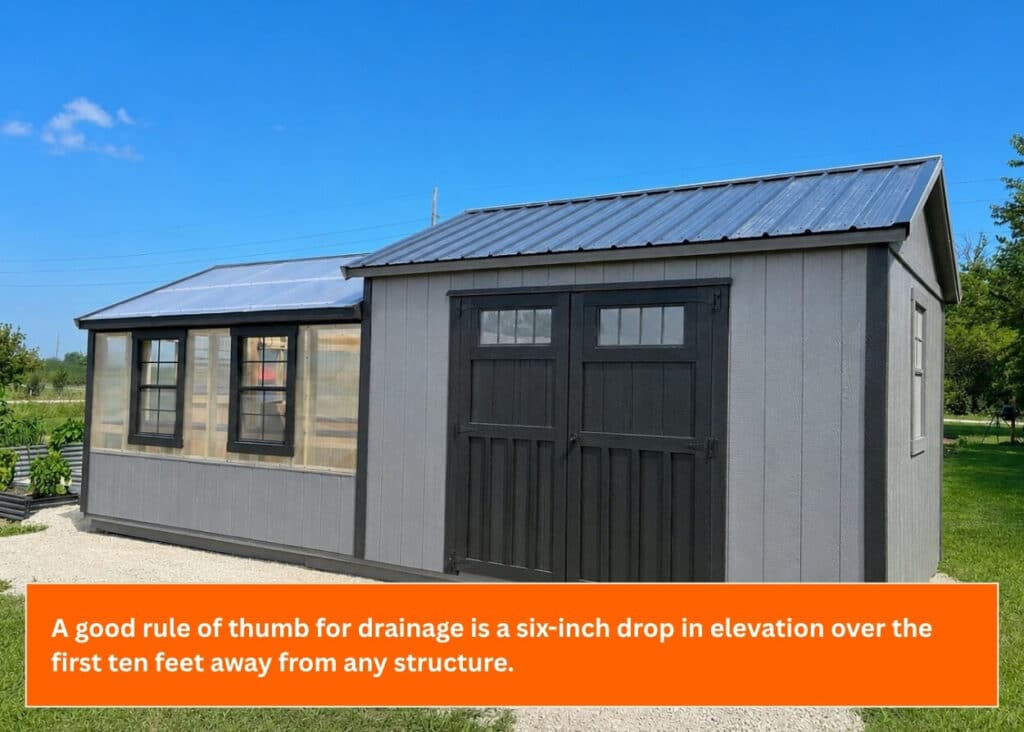
Level ground matters more than people expect. An uneven foundation can cause doors to stick, walls to shift slightly, and moisture to pool in the wrong places. According to the International Association of Certified Home Inspectors, a good rule of thumb for drainage is a six-inch drop in elevation over the first ten feet away from any structure. That same principle applies to your shed pad.
As for base material, a few common options include:
- Crushed gravel or rock, which drains well and is one of the most popular choices
- Compacted dirt, which can work in the right soil conditions but drains less effectively
- Concrete blocks or a poured pad, which offer the most stability for larger buildings
If you’re not sure which option fits your situation, we keep a list of trusted local contractors who can help with pad prep, and our team can talk through the right fit for your structure and property. A level pad earns its keep years down the road: protecting your investment, which in turn keeps your contents dry and safe.
Before delivery day, also clear the area of:
- Tall grass, brush, or overhanging branches
- Rocks, stumps, and old landscaping debris
- Play equipment, garden beds, or anything else in the footprint
With the ground ready, the next step is making sure the truck can actually get the building into place.
Plan for the Truck, Not Just the Building
It’s easy to picture the finished shed sitting in your backyard and forget about the process of getting it there. But delivery trailers are big, and they need room to maneuver.
A few things to measure and check ahead of time:
- Gate width. Many residential gates are narrower than people realize once a trailer and building are factored in.
- Overhead clearance. Power lines and low tree branches are the two most common obstacles.
- Turning radius. Straight, wide paths are easier than tight corners.
- Slopes. A steep driveway or yard makes it harder for a trailer to back into position safely.
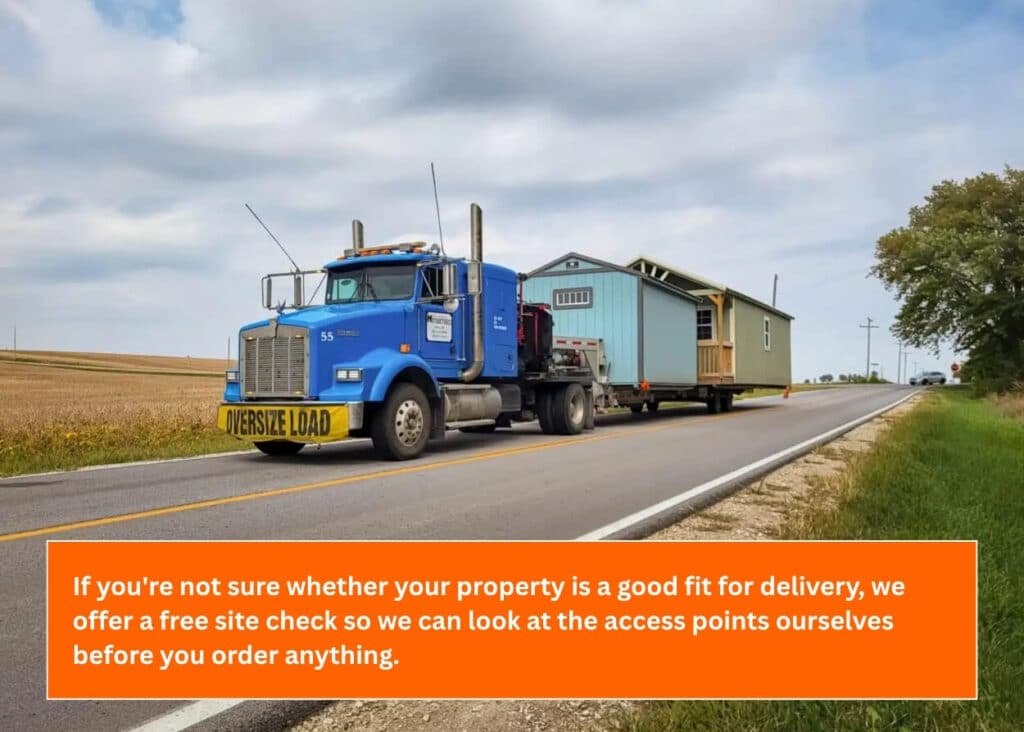
If your lot is in a tight in-town area, or you’re just not sure whether your property is a good fit for delivery, we offer a free site check so we can look at the access points ourselves and let you know what’s possible before you order anything.
Once you know the physical site is ready, there’s one more category worth checking: the rules.
Check Nebraska Rules and Utility Lines First
This step doesn’t take long, but skipping it often causes problems or delays. Nebraska cities and counties don’t all handle backyard structures the same way, so a little research now saves headaches later.
Permits vary by location. In much of the state, smaller storage sheds fall under a size threshold that doesn’t require a permit, but the threshold varies from city to city. Omaha, for example, requires a permit for sheds over 75 square feet, which is stricter than many neighboring communities. If you’re in Cass County, the Cass County Planning and Zoning Department handles permit questions and can tell you exactly what applies to your property. We don’t pull permits on your behalf, but our team is happy to talk through what’s typically required for your area and structure so you know what to expect before you call your local office.
HOA rules are separate from city rules. Even if your city doesn’t require a permit, your homeowners association might have its own restrictions on size, placement, or style. It’s worth a quick email or phone call before you order.
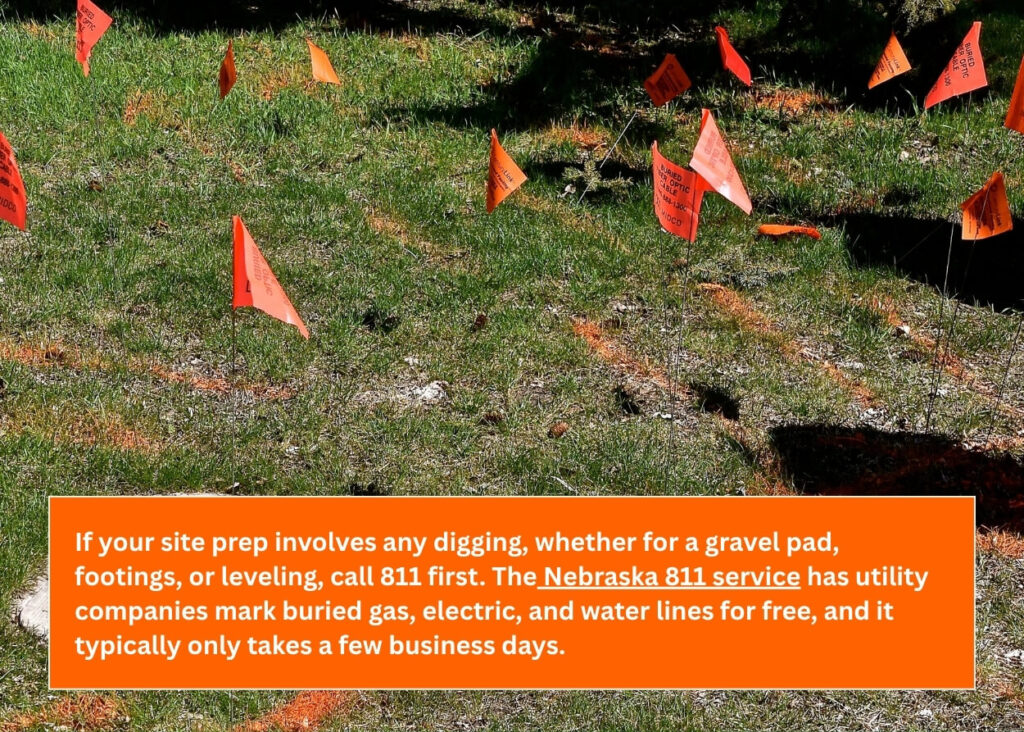
Call before you dig. If your site prep involves any digging, whether for a gravel pad, footings, or leveling, call 811 first. The Nebraska 811 service has utility companies mark buried gas, electric, and water lines for free, and it typically only takes a few business days.
With those four areas covered, you’re in great shape. Now here’s a simple way to pull it all together.
Your Pre-Delivery Checklist
Run through this list about a week before your scheduled delivery:
- Location confirmed, with drainage, sunlight, and setback requirements in mind
- Ground leveled and cleared of debris, vegetation, and obstacles
- Base material in place if needed
- Delivery path measured for width, height, and turning room
- Permits and HOA approval confirmed, if required
- Utility lines marked if any digging was involved
If every box is checked, delivery day should go quickly and smoothly.
Bringing It All Together
Picture delivery day going exactly the way it should: the trailer backs in without any tight squeezes, the structure sets down level on solid ground, and within a few hours, your new shed or backyard building is ready to use. No last-minute scrambling, no surprise fees, and no delays. Just sign off on the paperwork, and start moving stuff in. That’s what proper site prep makes possible.
If you’re getting ready to order a shed, garage, cabin, or any other backyard structure, Creative Backyards is happy to help. Reach out for a free site check, and we will walk your property with you, answer your questions, and make sure everything is lined up before delivery day arrives. You can also stop by our display lot in Plattsmouth anytime; our models are always open, even if we’re not there.
Other Posts
How to Insulate and Install Interior Siding in a Shed: A Step-by-Step Guide
How to Transform a Shed Into a Comfortable, Productive Home Office